About Us
Experienced Teachers. Stronger Concepts. Better Learning.
Good teaching is not about completing chapters as quickly as possible. It is about understanding where a student is struggling, explaining the concept clearly and helping the student become confident enough to solve questions independently.

Our Story
Building Students Who Reason, Not Students Who Memorise
In 2012 we were one teacher and four students in a rented room above a stationery shop. The first student who walked in had scored 31 in her half-yearly. She was not weak at chemistry — she had never properly understood the mole concept, and every chapter after it had quietly collapsed on that one gap.
We spent three weeks going backwards before we went forwards. She finished boards at 89. That sequence — find the missing idea, repair it, then move — is still exactly how we run every batch fourteen years later.
By The Numbers
Fourteen Years Of Results, Not Claims
Every figure below comes from our own 2025 batch records, and the marksheets are at the centre for any parent who asks to see them.
3,200+
Students Taught
14 Years
Teaching Experience
96%
Scored 90+ In Boards
1 : 12
Teacher Student Ratio
What We Stand For
Four Principles We Have Never Traded Away
These were true when we had four students and they are still true at three thousand.
Reasoning Over Recall
Every formula is derived at the board before it is used, so you know when it applies and, more importantly, when it does not.
Small Enough To Notice
Twelve students means the teacher knows within a week which one has stopped following, and says so before the test does.
Feedback In Writing
Papers come back with the wrong step circled and a line on how to fix it — not a number at the top and a shrug.
Parents Kept In The Loop
A written update every month with test scores, attendance and one honest sentence on what needs work.
How We Teach
What A Week In One Of Our Batches Looks Like
Four things run every week, from the first class of the session to the last revision sprint.

Written Diagnostic
Before you join a batch you sit a short written paper. It tells us which earlier idea is missing, and we tell you in plain language.

Concept At The Board
Each topic is derived, not dictated. Notes come after understanding, so the notebook is a record and not a substitute.

Practice And Hand Checking
Assignments every week, checked by a person in forty-eight hours, with the exact step where the reasoning broke marked out.

Error Log And Revision
Every mistake goes into a running log. By the third month most students are repeating a mistake once instead of every test.
Our Faculty
The Three People Who Will Actually Teach You
No rotating guest faculty and no substitutes halfway through a chapter. You will know all three of them by name within a fortnight.
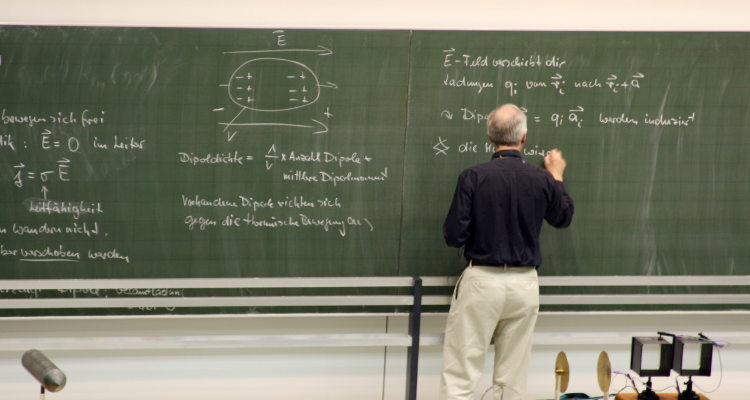
Ankit Raizada
Lead Faculty · Physical & Organic
M.Sc. Chemistry, Delhi University. Fourteen years teaching Class 11 and 12, and the person who takes every foundation batch himself.

Dr. Neha Kaul
Senior Faculty · JEE & NEET
Ph.D. in Organic Chemistry. Handles the competitive batches and writes the weekly problem sets and mock papers.

Suresh Menon
Faculty · Inorganic & Practicals
Former school lab in-charge. Runs salt analysis, titration practice and board practical viva preparation.